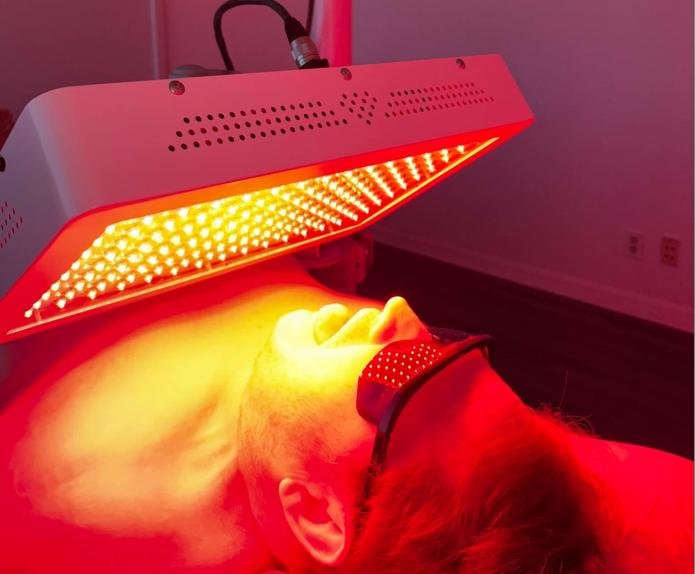
Alesis OSA1: Photonic Technology for Targeted Fat Reduction in OSA Treatment

First FDA-cleared, non-invasive device targeting the pathophysiologic mechanism of obstructive sleep apnea through localized adipose reduction in the upper airway.

FDA Clearances K160880, K150336, K180338, K202361
Patent Portfolio 11 Patents, 31 Countries
Safety Track Record 10+ Years, No Adverse Outcomes
Clinical Trial NCT06949969

Alesis Medical manufactures medical equipment for the sleep medicine community.

Schedule a Zoom Meeting

Addressing the Anatomic Substrate of OSA

Recent MRI volumetric studies have established that tongue and parapharyngeal fat deposition represents a primary pathophysiologic mechanism in obstructive sleep apnea, independent of overall BMI.

100%
Submental Fat Reduction
All subjects in randomized IRB trial (NCT06949969) demonstrated significant reduction in submental adipose tissue and neck circumference
80%
AHI Improvement Rate
Subjects achieved 51-85% reduction in Apnea-Hypopnea Index within 3-week treatment protocol
63%
Significant Neck Reduction
Test subjects lost >0.9" neck circumference—equivalent to 10-20% total body weight loss—without systemic weight reduction
40-70%
CPAP Non-Adherence
Discontinuation rate due to intrusiveness, discomfort, noise, and travel limitations—representing critical treatment gap
48%
Tongue Fat Reduction (MRI)
Published AJRCCM data: 32% weight loss correlates with 48% lingual fat reduction and 80% AHI improvement (Wang et al., 2020)
$8.1B
US Market Opportunity
Annual OSA treatment expenditure with expanding demand for non-PAP therapeutic alternatives
Key Literature Supporting Targeted Fat Reduction
  • Wang et al., AJRCCM (2020): "Effect of Weight Loss on Upper Airway Anatomy and the Apnea-Hypopnea Index: The Importance of Tongue Fat" — MRI volumetric analysis demonstrates 32% weight loss produces 48% reduction in tongue fat (14,126mm³ to 7,337mm³) with corresponding 80% decrease in AHI (121 to 24.6)
  • Parapharyngeal and retroglossal fat deposits shown to narrow pharyngeal airway diameter independent of BMI and total neck circumference
  • Bariatric surgery outcomes confirm AHI improvement occurs disproportionately early relative to total body weight reduction
  • Localized adipose reduction in upper airway structures represents mechanistic target independent of systemic weight loss
  • Clinical Trial NCT06949969: Randomized IRB study demonstrating 100% efficacy in submental fat reduction and 80% improvement rate in sleep apnea severity
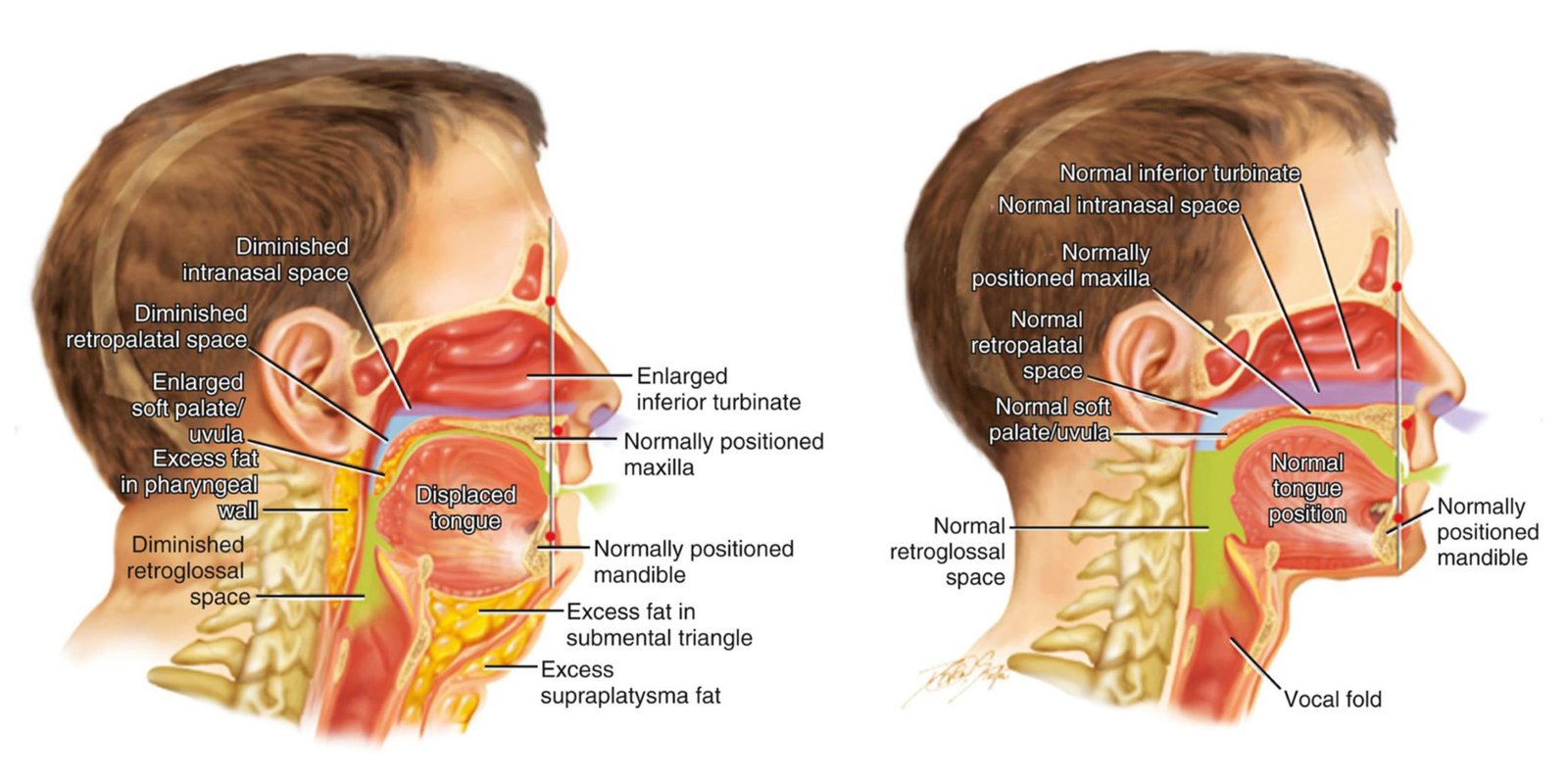
Upper Airway Airflow
Schedule a Zoom Meeting
Photonic Lipolysis Treatment

Mechanism of Action: Photonic Lipolysis

Patented high-powered non-laser photonic energy induces lipolysis through mitochondrial chromophore activation (cytochrome c oxidase), triggering cellular response mimicking famine state without thermal or destructive effects on adipocyte viability.

1
Chromophore Activation
Specific wavelength photonic energy absorbed by mitochondrial cytochrome c oxidase in adipocytes, initiating photobiomodulation cascade
2
Transient Membrane Permeabilization
Adipocyte membrane becomes temporarily porous through non-thermal mechanism, creating channels for lipid mobilization
3
Triglyceride Release
Intracellular triglycerides exit as non-esterified fatty acids (NEFAs) and glycerol through membrane pores; concurrent stimulation of leptin, adiponectin/Acrp30, and IL-6 secretion
4
Adipocyte Volume Reduction
Cell volume decreases as lipid content mobilizes; adipocyte remains viable with intact cellular machinery and restored membrane integrity post-treatment
5
Dermal Remodeling
Concurrent photostimulation of fibroblasts increases collagen and elastin synthesis, producing skin tightening and improved tissue architecture
Clinical Protocol & Treatment Parameters
  • Treatment Duration: 12 minutes per session, administered twice weekly for 3 weeks (total: 6 treatments)
  • Anesthesia: None required; completely non-invasive outpatient procedure
  • Patient Selection: OSA diagnosis confirmed by polysomnography (AHI ≥5), overweight patients, CPAP-intolerant or seeking alternatives to PAP therapy
  • Selective Draping: Opaque draping available to protect facial areas where fat reduction is not desired (e.g., patients wanting airway improvement without facial volume loss)
  • Contraindications: Pregnancy, active malignancy in treatment area, photosensitivity disorders, porphyria
  • Post-Treatment: Immediate return to all normal activities; zero recovery time or activity restrictions
  • Monitoring: Pre- and post-treatment polysomnography, neck circumference measurements, patient-reported outcomes
Schedule a Zoom Meeting

OSA1 vs. Current Standard of Care

Clinical Parameter Alesis OSA1 CPAP/BiPAP Oral Appliance UPPP Surgery
Addresses Root Cause Partial
Non-Invasive
No Nightly Compliance Required
Zero Recovery Time
Adverse Event Profile None reported Common (skin irritation, claustrophobia) Common (TMJ, dental) Significant (pain, bleeding, infection)
Long-term Efficacy Under investigation Excellent (if adherent) Moderate Variable (50-60%)
Patient Compliance High (minimal burden) Poor (40% discontinue) Moderate N/A
Schedule a Zoom Meeting

Representative Patient Outcome

Commercial Airline Pilot with Severe OSA

Patient Profile:
• 310-lb commercial pilot
• Severe OSA requiring FAA-mandated CPAP compliance documentation
• Occupational licensure contingent on treatment adherence

Treatment Protocol:
• Three 12-minute OSA1 treatments
• Targeted submental and cervical adipose reduction

Outcomes:

85%
AHI Reduction
3.5 to 0.5 events/hour (with CPAP)
Achieved in 3 treatment sessions over 3 weeks

Patient maintained pilot certification while achieving clinically significant improvement in sleep architecture and daytime function.

Schedule a Zoom Meeting

Seamless Integration into Your Sleep Medicine Practice

Designed for efficient deployment within existing clinical workflows with comprehensive support infrastructure.

Clinical Protocol Support
Comprehensive treatment guidelines, patient selection criteria, and outcome tracking systems aligned with standard polysomnography metrics
Reimbursement Pathway
Established CPT coding framework, payer relations support, and documentation templates for claims submission
Physician Training & CME
Structured certification program with continuing medical education credits for treatment administration and patient management
Data & Outcomes Tracking
Electronic integration capabilities for seamless documentation, outcome monitoring, and contribution to ongoing clinical registry
Patient Education Materials
Evidence-based literature, informed consent documentation, and multimedia resources for patient counseling
Research Collaboration
Opportunity to participate in ongoing multi-site trials and contribute to peer-reviewed literature on treatment efficacy
Schedule a Zoom Meeting

Reimbursement & Practice Economics

Coding & Documentation
  • CPT Codes: Established procedural codes for photonic fat reduction therapy (specific codes provided during credentialing)
  • Diagnostic Requirements: Polysomnography documentation (AHI threshold), previous treatment attempts/contraindications
  • Medical Necessity: Clinical guidelines for appropriate patient selection and treatment justification
  • Payer Coverage: Growing acceptance among commercial insurers; dedicated reimbursement support team
  • Out-of-Pocket Options: Structured self-pay programs for patients preferring direct access
Practice Revenue Model

Revenue Potential:

$30,000
Monthly Net Revenue
With only 10 patients per month
Achievable within 30 days of implementation
  • Minimal physician time required
  • Staff-administered treatments
  • High patient satisfaction and referrals

Practice Advantages:

  • Addresses 40-70% CPAP non-adherence patient population
  • Differentiates practice in competitive sleep medicine market
  • Captures treatment-resistant patient segment
  • 12-minute treatment duration enables high throughput
  • Flexible implementation: in-office or partnership models
  • Excellent patient compliance vs. nightly CPAP burden
Schedule a Zoom Meeting

Quality & Compliance

FDA Clearances
  • K160880
  • K150336
  • K180338
  • K202361

Multiple 510(k) clearances establishing safety and efficacy across device iterations

Intellectual Property
  • 11 Utility Patents
  • 31 Countries Protected
  • U.S. Patents: 9,044,595; 9,498,641; 9,808,314; 10,946,210; 63/074,790

Technology invented 2011 by Terry J. Ward, Sr., M.H.A.; OSA application developed 2025

Manufacturing

Made in USA
Manufactured by Photonica USA, LLC

Quality Assurance:
10+ year safety record with zero adverse events or side effects reported in clinical use

Money-Back Guarantee

Complete satisfaction guarantee with full refund policy. Alesis Medical is committed to physician and patient success in OSA treatment outcomes.

Partner with Alesis Medical

Join leading sleep medicine specialists offering advanced treatment options for OSA patients.

Direct physician inquiries welcomed: Contact Terry J. Ward, Sr., M.H.A., Managing Director & CEO